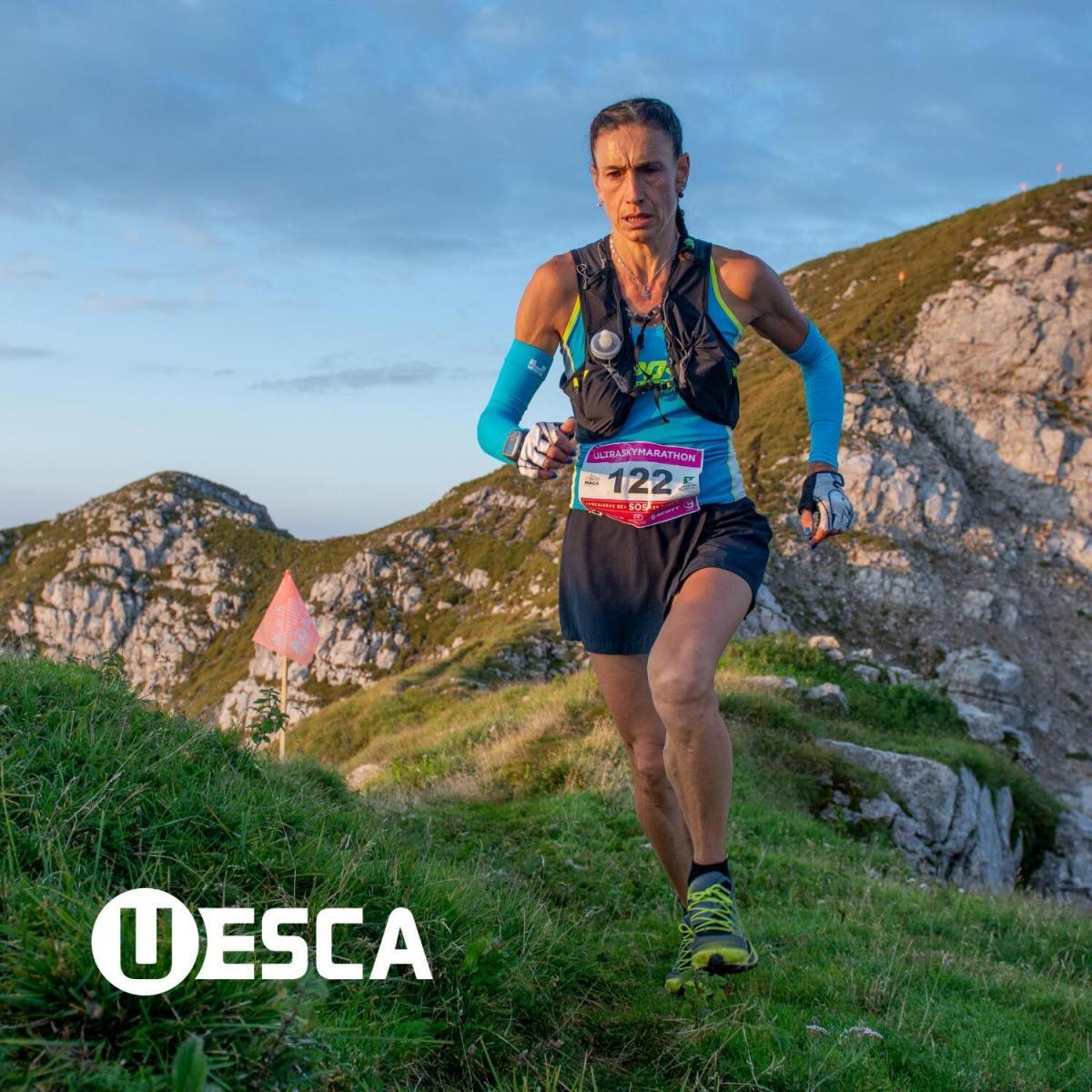
UESCA-certified running coaches share the advice they give to road runners who are interested in how to start trail running. Their trail running tips include focusing on rate of perceived effort instead of pace, wearing the right shoes, and bringing enough food and hydration to fuel a run.
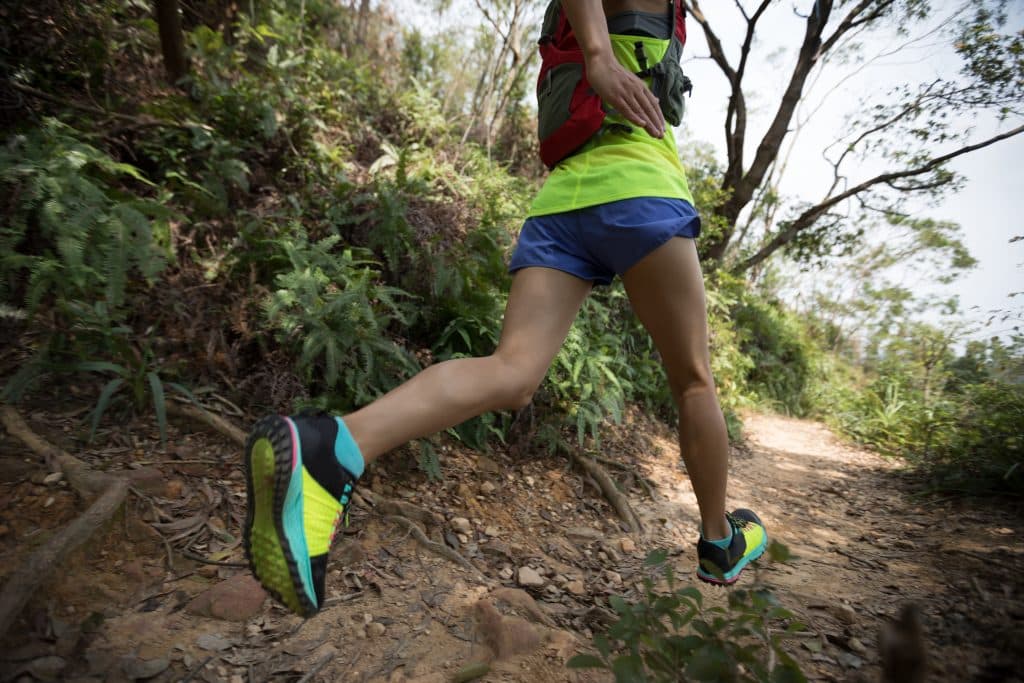
Many runners choose to get off the pavement and onto the trails for the mental health benefits of being in nature, and trail running is a great way to increase strength and endurance.
But even if you’ve been a road runner for years, there are differences on the trails that you’ll need to account for — varied terrain, steeper climbs, and gear and fueling needs, to name a few.
By preparing in advance and adjusting your expectations, you’re more likely to enjoy the experience and may find that the trails are where you belong.
Below, eight United Endurance Sports Coaching Academy (UESCA) running coaches share advice on how to start trail running.
Leave the ego behind and experiment with different foods.
As a runner who began my journey on the road and then integrated trail running, I know firsthand that the two are very different. Thinking back to the athletes that I have coached who have added trail running and races into their tool belts, there are two pieces of guidance that come to mind.
First, and probably most important, is to leave the ego behind. For runners who have only run on the roads, it can often be a mental hurdle to disassociate their road paces when they are on the trail. Especially when it comes to training for ultramarathons, we spend a lot of time talking about the importance of ‘time on feet’ versus speed.
The second thing is related to nutrition. Oftentimes, road runners rely exclusively on gels to keep their carbohydrate stores full during a race effort. During an ultramarathon on a trail, those gels can get old very quickly, and it takes some gut training to get used to taking in food as fuel as you progress through the race.
We make a deliberate effort on weekend long runs to fuel as if we were at a race, which means taking in peanut butter and jelly sandwiches, pickle shots, ramen noodles, and bacon.
For my road runners who have not yet run a trail race, we try to put them on the trail once a week for about an hour to build up some of the different muscle groups, and this ultimately makes them a stronger road runner.
James Levins, UESCA Running Coach, Endurance Sports Nutrition Coach
4-6 years coaching experience
TrueZone Coaching
Understand that your pace will vary based on terrain.
When starting out trail running, it’s important to remember your paces will not be the same as you have been used to running on the roads. The terrain will be different and there will be far more undulations and hills on the routes. These variables will require you to change your pace more.
Learn to run to effort rather than trying to hit certain paces. And try and have a couple of different shoe options: one for running on hard-packed trails and one for running on muddier trails. You will find running will be far more enjoyable on the trails when there’s no pressure to hit certain paces and you can stay on your feet on those muddy trails.
Phill Young, UESCA Ultrarunning Coach, England Athletics Endurance Coach, England Athletics Coach in Running Fitness
4-6 years coaching experience
Phill Young Coaching
@phillyoungcoaching | Find Phill Young Coaching on Facebook
Embrace a shift in mindset to be fully present in your run.
Trail running isn’t just a change in terrain from road running, it’s a total shift in mindset. Trails require presence. You’re constantly tuning into your surroundings, your breath, your footing. That forced mindfulness — being right here, right now, in the present moment — can help you let go of pace pressure and rediscover the joy of running.
For new trail runners, start with wider, less technical paths and embrace walking the climbs. Listen to your body. Trail shape builds from the ground up: strong ankles, glutes, and core. Prioritize strength work, wear grippy shoes, carry hydration, and fuel often. It’s grounding, challenging, and incredibly rewarding.
Janelle Brade, UESCA Running Coach, UESCA Ultrarunning coach, UESCA Sports Psychology, RunDNA Endurance Coach, RunDNA Gait Analysis Level 1, YAECP Mindfulness Certification
1-3 years coaching experience
Motivated In Motion
@motivated.in.motion
Use ‘time on feet’ as your target.
Trail running, in comparison to road running, is very unpredictable. Elevation, terrain, and underfoot conditions can all have a major impact on your pace, not to mention carrying a pack or navigating the local wildlife. Planning your training based on time on feet is a better way of managing your training load on the trails than by distance or pace.
You can still build a variety of sessions into your training exactly as you would on the road. For instance, on easy runs you’ll likely need to run slower to maintain a low heart rate, so time-based sessions give you the same benefit without extending the length of your run. And when it comes to those all-out hard sessions, make the most of the hills to get your heart racing rather than just increasing your pace. You’ll still get stronger and faster, and hopefully you’ll have more fun in the process!
Martha Urwin, UESCA Ultrarunning Coach, England Athletics Coach in Running Fitness
1-3 years coaching experience
Martha Urwin Run Coaching
@marthaurwin_runcoaching | Find Martha Urwin on LinkedIn
Bring enough nutrition and prioritize your safety.
My best tip for road runners transitioning to trails is to forget about pace entirely. When I made the switch, I spent far too long worrying about how ‘slow’ I was, as I was comparing the pace to my road paces.
Invest in a good pair of trail shoes. They’re more durable and will protect your feet from rocks. Check the maps, use an app like Garmin LiveTrack, and tell a friend where you’re going. Pack enough fuel and hydration — you need to think in time, not distance. You may not need fuel for a 7K on the road, but on technical trails, it could take you well over an hour. Also, expect (and don’t be afraid) to walk the inclines! Only we call that ‘power hiking’ — it sounds cooler that way.
If you like eating and you like being out in nature, then trail running is for you!
Kylie Morgan, UESCA Running Coach, Clinical Exercise Physiologist
10+ years coaching experience
Morgan Exercise Physiology
@morganexercisephysiology
Pay attention to your rate of perceived effort, not your pace.
Ditch the pace. Embrace the effort! Trails demand a shift in mindset — one that prioritizes rate of perceived effort (RPE) over rigid splits. The constantly changing terrain, elevation gains, and technical sections make pace unreliable. A smooth downhill may let you fly, while a steep and rocky ascent slows you to a hike.
Instead of chasing numbers, tune into your breathing, your effort, and how your body feels. Running by RPE allows for better pacing, reduces frustration, and helps you adapt to the trail’s natural rhythm. Go out for a set time versus a set number of miles, hit that goal RPE, and enjoy nature’s beauty!
Shannon Hogan, UESCA Running Coach
4-6 years coaching experience
Superior Singletrack
@superiorsingletrack
Train for the downhill.
Don’t neglect the eccentric phase of exercises during strength sessions. Some road runners consider downhills as a “recovery” phase, which unfortunately, couldn’t be any further from the truth. Since we need to produce more braking force, it’s crucial to pay attention to the eccentric phase so the working muscles are more resilient.
Dominik Bolerác, UESCA Running Coach
1-3 years coaching experience
@domodrum
You don’t have to do all of your runs on trails to run a trail race.
In fact, if you live in an urban setting, you can do all of your weekday runs on pavement, then venture to a trail on the weekends and still find success on race day.
Use your watch to track overall average pace and your distance, but don’t stress about splits and keeping a steady pace as you navigate uneven and hilly terrain. Your heart rate and your paces will fluctuate quite a bit. Especially at first, it is best to go by feel, enjoy the route, and get to know how it feels to run on trails.
Finally, bring a friend or two or three! Depending on the trails, your safety concerns will vary. Having a partner or group with you will increase your safety when things don’t go as planned.
Michelle Bolay, UESCA Ultrarunning Coach
1-3 years coaching experience
Prairie to Peak Running
@prairie_to_peak_running | Find Prairie to Peak Running on Facebook
This article was originally produced and published by Running Lifestyle Media.