Coaching para-athletes is a rewarding and challenging opportunity for endurance coaches. Before working with a para-athlete, there are four things to consider.
Written by Jim Rowe, Triathlon Coach
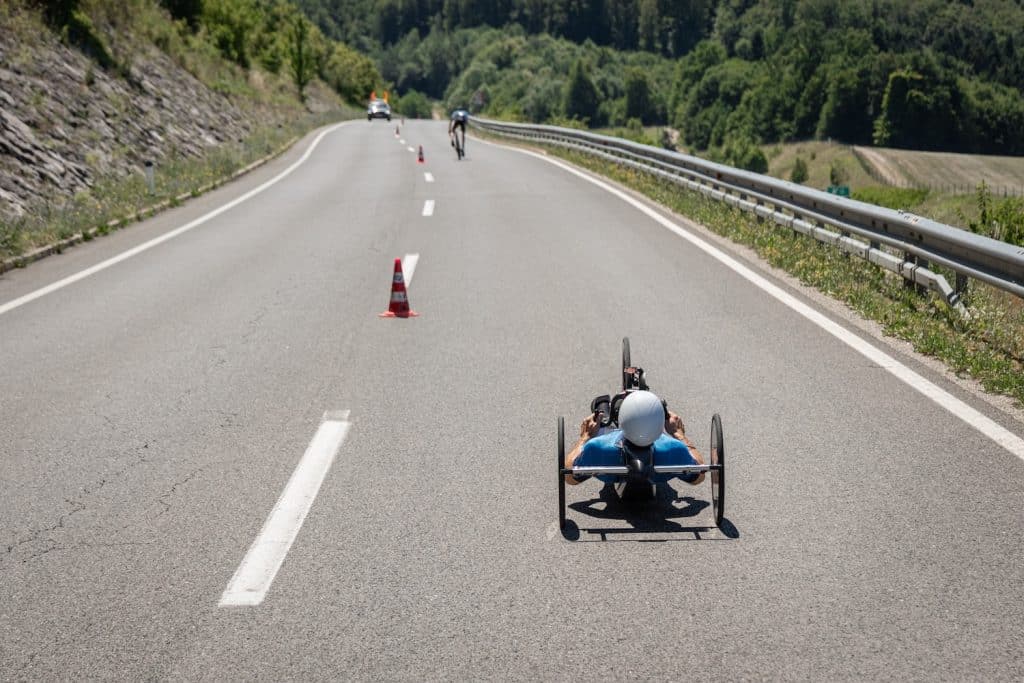
One of the greatest privileges I have had as a triathlon coach is the opportunity to work with paratriathletes. Paratriathlon is the adaptive division of triathlon, designed to accommodate athletes with physical, visual or intellectual impairments. And over the years, I’ve worked with amputee and wheelchair triathletes, who have also participated in swimming, cycling and running events.
I won’t go into the details of the whole classification process for para-athletes, because each sport has different classifications and criteria. Rather, my intent is to encourage fellow endurance coaches that working with a para-athlete is not as intimidating as it may first seem.
Para-sport offers coaches opportunities that are more than just looking at workout files. Para-athletes, their support team (family, friends, medical support) and coaches work as a team to help the para-athlete thrive.
Working in para-sport is refreshing and challenging and requires a coach to be both a problem-solver and humble. As a coach, you bring a wealth of knowledge about the sport. But you may also have limited knowledge, at least at first, of how a particular para-athlete’s impairment impacts their performance, recovery and daily life.
If you are presented with an opportunity to work with a para-athlete, here are four things to consider:
1. Each para-athlete is really a sample size of one (n=1).
It can be difficult to understand the key performance indicators for a para-athlete when you are first starting out. When you start working with a para-athlete, this is the time to be extremely inquisitive by asking good questions, staying open minded and avoiding preconceived ideas of what is required to do the sport.
I know this is a cliché. Yes, every athlete is unique. But the para-athlete you are working with is the only person with the experience of living with this particular impairment. They are the expert. So, let their experience influence your coaching.
Also, take into consideration the societal inattention for people with disabilities. Can they safely access a place to swim, bike, run and do strength work? How can you as a coach advocate for them at training locations and races?
2. Prioritize recovery and skin care.
Recovery and skin care are huge factors for para-athletes, especially for amputee and wheelchair athletes. If an amputee develops a skin lesion where their body contacts their prosthetic, it can be both painful and dangerous, potentially leading to infection. Amputee athletes need to keep a close eye on skin care and allow for adequate recovery after training and racing to make sure no issues develop.
Likewise, wheelchair athletes need to be aware of any pressure wounds developing from being in a seated or kneeling position for most of their training and racing. They also need to pay attention to how their shoulders, upper back and neck are feeling, since muscles in these areas tend to become overbuilt. If any soreness arises, it is best to increase recovery before issues develop.
3. Be ready to learn more than you are ready to coach.
There is a Zen koan that says, “First there is a mountain, then there is no mountain, then there is.”
I’ve found that working with para-athletes is very much like this. You may start by taking things very seriously and thinking that your training as a coach did not prepare you for this. Then, as you work together with your unique para-athlete, you begin to work through your preconceptions about yourself, the para-athlete and how to coach — all while learning and growing. Finally, you see things just as they are.
I have had this experience with every paratriathlete I have worked with. Hill repeats on the bike were hill repeats, until we learned that balance was an issue for a triathlete I was working with, since he only had one arm. Once we figured out how to address the balance issue, then hill repeats became hill repeats again.
4. Find a coach mentor.
Coaches in para-sport are passionate about what they do. They absolutely love the niche of the sport they are working in and are more than happy to talk with you if you have questions.
At least, that was the experience that I had when I first started, and the experience I continue to have. I’ll regularly reach out to more experienced paratriathlon coaches when I don’t have answers to questions, and I take every opportunity I can to learn from them.
Final Thoughts
Coaching endurance athletes can, at times, start to feel a bit like you are doing the same thing over and over. Working with para-athletes provides an opportunity to engage in the sport you love in a way that is completely new and refreshing. Each paratriathlete that I have worked with has truly impacted my overall coaching practice, as they have helped me refine the soft skills of coaching and reminded me of the importance of coaching within the mindset of “person first, athlete second.”
About the Author
Jim Rowe is a full-time triathlon coach at Playtri, where he is the Coach Education Lead. In his role at Playtri, he works with new coaches, adult triathletes, paratriathletes and Team Playtri Elite (a top-10-ranked junior elite team in the U.S.).